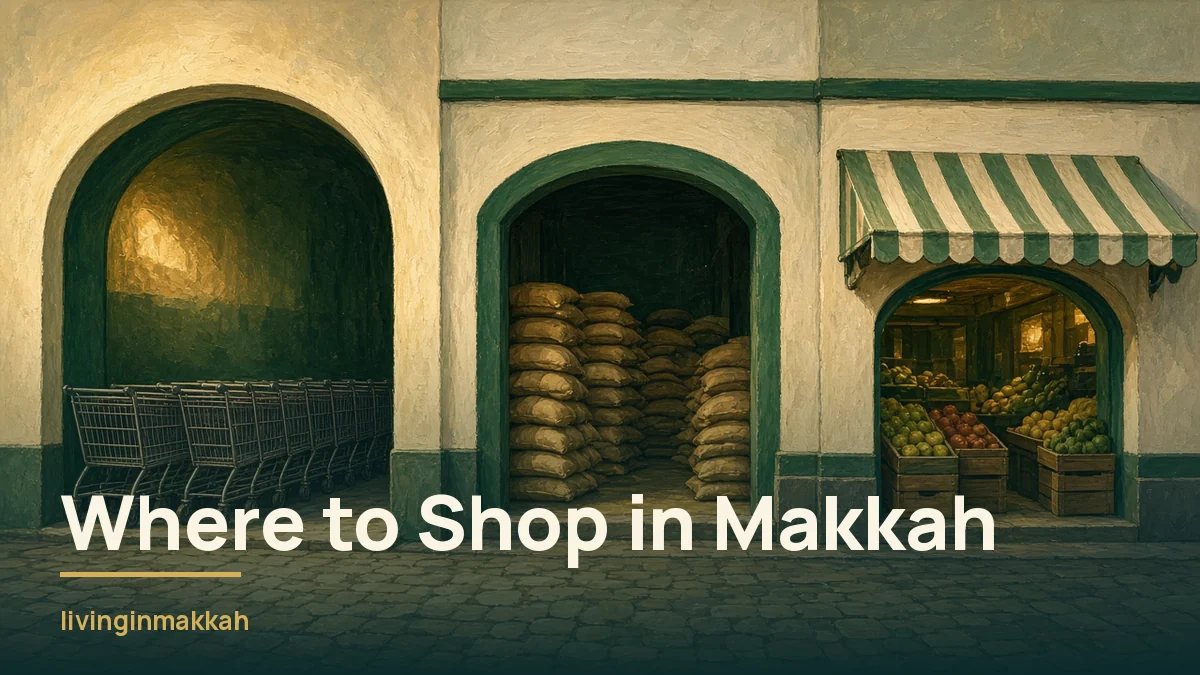
Most households in Makkah do not shop in one place. They mix a big weekly trip, the odd bulk run and quick visits to the corner shop. Each type of shop works differently, and knowing what each is good for saves time, stress and waste.
This guide is about the types of shop, not prices. If you want to compare prices, our guide to checking grocery prices explains a simple basket method.
Quick answer
Short answer: Use a hypermarket for the weekly shop and offers, a wholesale market for long-life staples you use in volume, and the neighbourhood baqala for daily top-ups like bread, milk and water. Mixing all three, with a plan, usually works better than relying on one.
The three main types of shop
| Type | Best for | Watch for |
|---|---|---|
| Hypermarket / large supermarket | Weekly shop, wide range, fresh counters, weekly offers | Traffic, parking and time at peak hours |
| Wholesale market | Rice, oil, sugar, tea, cleaning supplies in large packs | Storage space, expiry dates, carrying heavy loads |
| Baqala (neighbourhood shop) | Bread, milk, eggs, water, small top-ups | Smaller range; some items cost more per unit |
Hypermarkets: the weekly shop
Large supermarkets and hypermarkets sit on the main roads and in malls. They carry fresh meat and fish counters, bakeries, household goods and large frozen sections.
They suit a planned weekly shop. Weekly flyers and app offers can be useful, but only for things you were going to buy anyway.
Tip
Go early in the day or late in the evening on weekdays. Avoid the hour before Maghrib and the days just before Ramadan and Eid, when car parks fill up.
Wholesale markets: buying in bulk
Wholesale areas sell staples in large sacks, tins and cartons. Some residents in districts such as Al-Kaakiyah live close to this kind of trade.
Bulk buying only helps if you will use everything before it expires and have somewhere cool and dry to store it. In Makkah’s heat, storage matters as much as the purchase.
Good candidates for bulk buying
- Rice and flour (if you cook daily)
- Cooking oil
- Sugar, tea and coffee
- Tinned goods you use every week
- Cleaning products and tissues
The baqala: your daily top-up
The small neighbourhood shop is part of daily life in most districts. It is the quickest way to get bread, milk, eggs, water, phone top-ups and small household items.
The range is smaller and the price per unit can be higher, but the time you save is real. Many families keep one or two trusted local shops for the whole week’s small needs.
Delivery apps and online orders
Most large chains, and some local shops, deliver through their own apps or delivery platforms. Delivery suits heavy items such as water cartons or when it is very hot outside.
Check the full checkout total, delivery windows and how substitutions are handled before you rely on it.
Checking the shop is above board
Residents have consumer rights in Saudi Arabia. The Ministry of Commerce handles consumer complaints, for example about prices not matching labels. Food safety and product labelling fall under the Saudi Food and Drug Authority.
Before you buy
1
Read the expiry date: especially on bulk packs and discounted items.
2
Check the label: product name, origin and storage instructions should be in Arabic.
3
Keep the receipt: you need it for any complaint.
4
Report a problem: through the Ministry of Commerce channels if a shop will not resolve it.
A simple weekly routine
Many resident families settle on a pattern like this:
- One weekly trip to a hypermarket for fresh food and household goods.
- One bulk run a month for staples, if there is storage space.
- Daily or near-daily baqala visits for bread, milk and water.
Food prices across the Kingdom are tracked monthly by the General Authority for Statistics, which helps you see the overall trend.
FAQ
Is wholesale always cheaper?
Not always. Compare the price per kilo or litre, and only buy what you will use before it expires.
Can I buy from a wholesale market as a household?
Many wholesale sellers serve walk-in customers, but some sell only in full cartons or sacks. Ask before you queue.
Where do newcomers usually start?
Most start with a nearby supermarket and a local baqala, then add bulk buying once they know their routine. Our groceries guide covers the basics.
Last checked: 16 November 2026. No shop prices are quoted.